How I Used Claude, Google Calendar, and Notion to Help Four Teenagers From Two Families Bond
The activities and bonding layer I add on top of a family's meal system. The kids vote each week, Claude learns each of them, and their calendar runs the plan.
The Visible Practitioner: a weekly system that helps a blended family of teenagers bond.
By Darlene Killen, founder of The Visible Practitioner
The hard version of a blended family
I built this for a blended family. Four teenagers, two prior marriages, one house, and none of them chose each other.
If your house is two sets of kids who didn’t pick each other, screens up, doors closed, and you’re the one carrying every plan, this is the build for that.
A family can share a roof and still be four kids who tolerate each other while two adults referee. Bonding doesn’t show up because someone put a game night on the calendar, and with teenagers, forced fun usually backfires.
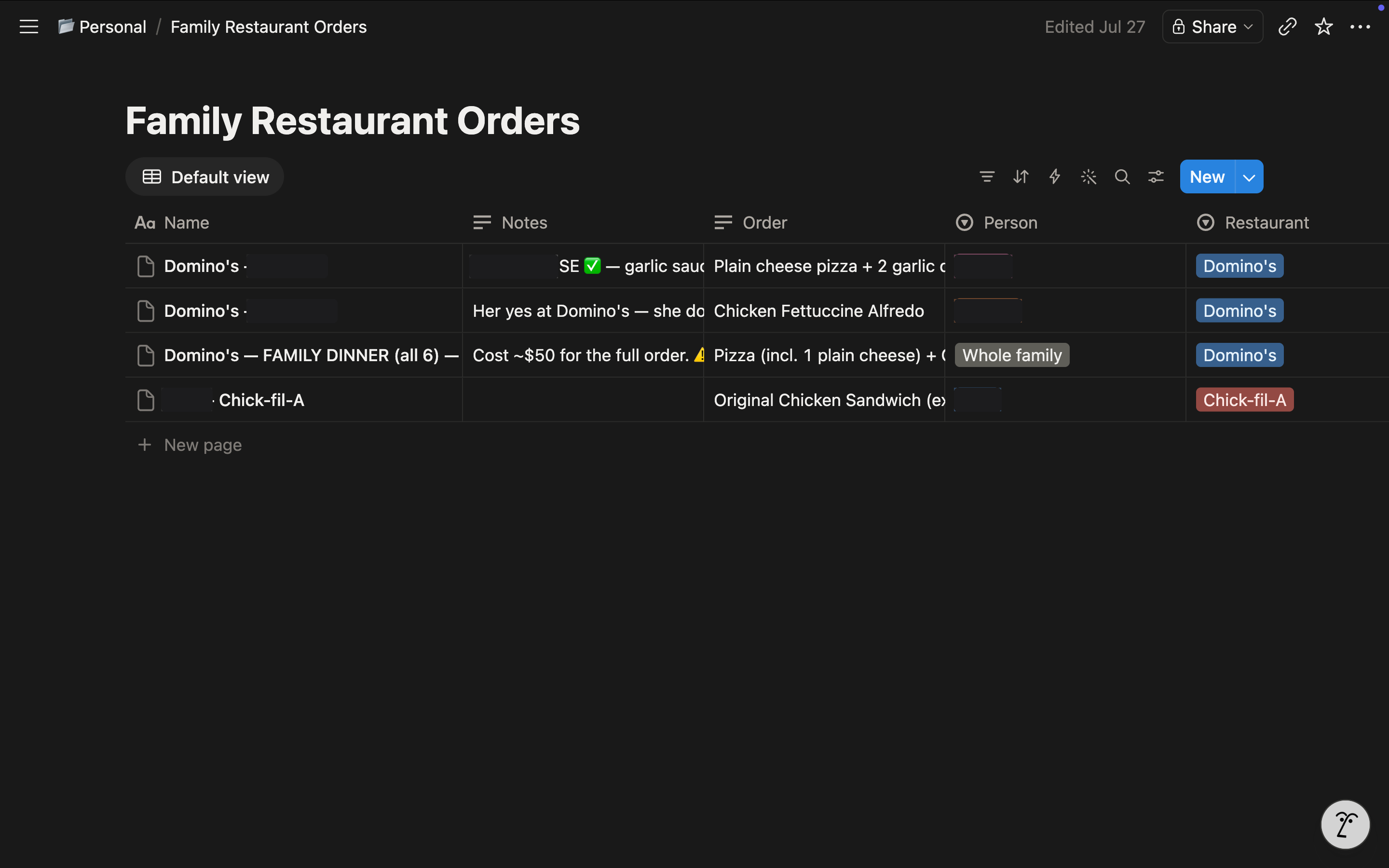
They already had the meal system I set up to end the nightly “what’s for dinner.” This is the layer I built on top of it, and it ended up running most of their week.
Their family therapist said this is the thing blended families need most and almost nobody sets up. So I built it.
What the system is
Every kid has a profile in Notion that Claude filled in by interviewing them. Once a week the family holds a meeting where the kids vote on the week ahead. Google Calendar delivers whatever they agreed to.
The software is the least interesting part of this. What matters is that the kids get a real say, so they show up for the plan instead of fighting it.
I built the whole thing inside Claude, Notion, and Google Calendar, all tools the family already used.
If you’ve got a thing like this in your own life, that’s what I do. You tell me what’s eating your time, we build it together out of the tools you already have, and you never learn a new app. Details at the bottom.
What the kids vote on
At each meeting they weigh in on:
Which dinners they’re having, and which night, so a parent knows what to pull from the freezer to thaw
Grocery add-ons they want in the house
How the chores get split that week
The one thing each kid gets to do one-on-one with a parent
The one outing the whole family does together
The kids also bring their own food ideas. When one of them sees a recipe on TikTok, Instagram, or Snapchat that looks good, they send the video to a parent, and it goes on the list to vote on at the next meeting.
Any kid old enough to stay home on their own can opt out of a dinner or the outing. Because they already know the week’s meals and the grocery order, opting out isn’t a scramble. They know what else is in the house to eat. Almost none of them do anyway, because they helped choose it.
How it knows what to put up for a vote
This is the part that does the heavy lifting, and it’s the piece most people can’t picture until they see it.
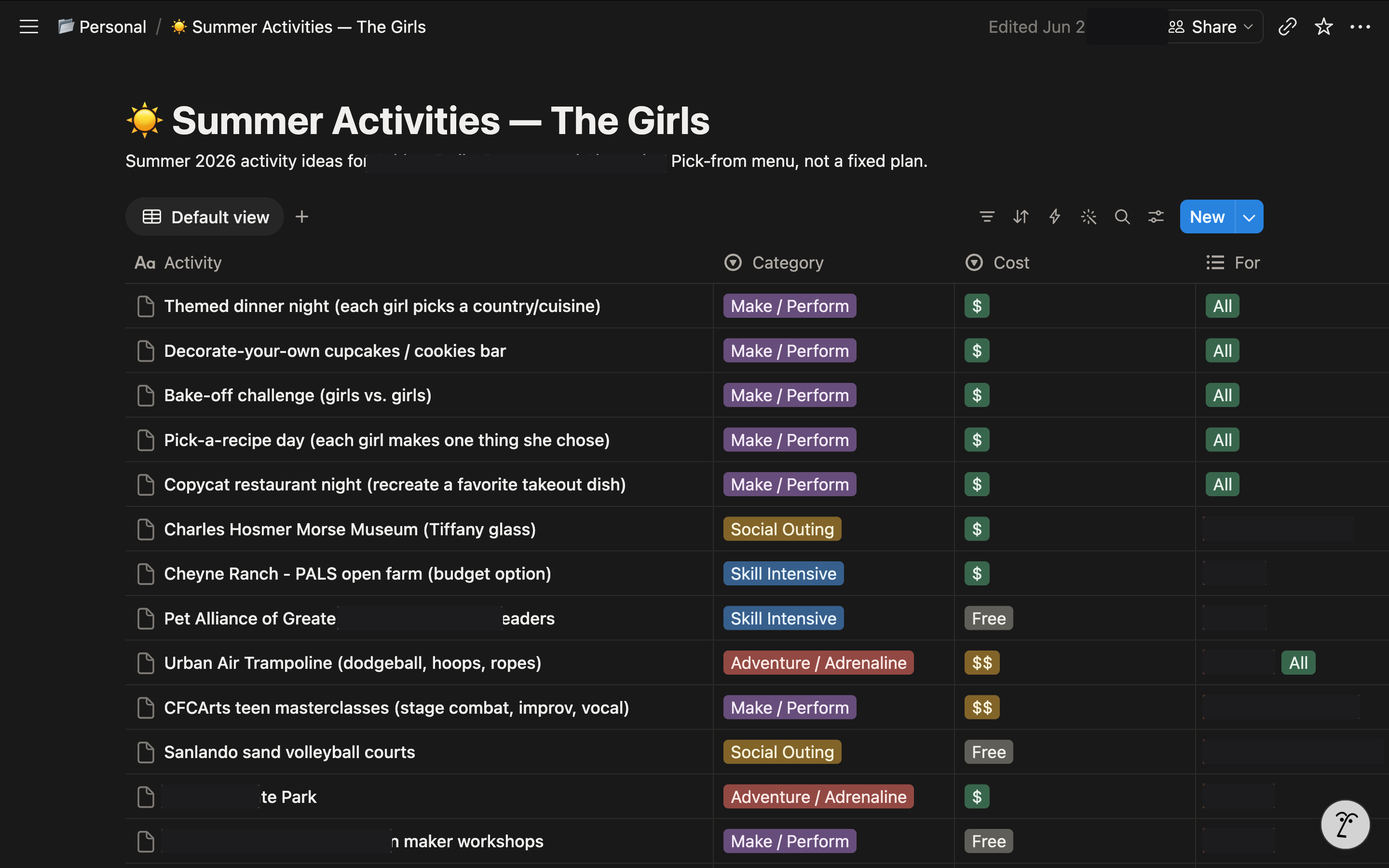
Each kid’s profile feeds a search. Google’s AI looks up what’s actually going on near us that week, with real prices and real age limits. Claude takes that list and filters it against each kid, so a loud adventure kid and a quiet maker kid don’t get handed the same three options.
What comes out is a short, custom ballot for each kid. Real events, current, close by, in budget, matched to who they are. Nobody’s Googling “things to do with teenagers” at 9pm anymore.
The parents never build the list. The system does. The kids just vote on what it found.
Food works the same way. When a kid sends a recipe they saw on TikTok, it goes onto the next ballot. Their taste feeds the system, and the system hands it back as a choice.
That’s the whole loop. Notion holds who each kid is. Claude does the thinking. Google Calendar delivers what they picked. Every meeting makes the next one sharper. I call it the Brain Offload Method.
What I built
A profile for each kid, from questions Claude wrote. Not a generic survey. Claude wrote the questions for each kid, based on their personality and the way they take in information. One answers best with concrete choices in front of her. Another needs room to think out loud. Each profile tracks what they’re into, how their energy runs, how social they want to be, and the things they never want to be signed up for.
The engine that turns those profiles into real options. The profiles aren’t just notes. They drive the weekly search that pulls current local activities, filtered per kid, into the ballot they vote on. That’s what makes the plan fit these specific kids instead of some generic family.
The part that made gift-giving easy. Each profile also keeps current clothing sizes from real measurements, favorite colors, brands, fabrics and styles, and links to specific things the kid has said they want. Birthdays and holidays stopped being a guessing game for the parents. They still check with the kid before buying, because a teenager’s favorite everything can change in a month.
Room for more than one adult’s opinion. Any one parent only knows part of a kid. A therapist or a teacher sees a side they don’t. Claude can write up a short note explaining what the family is doing and why, so those adults can add what they see to a kid’s profile.
Rules that treat the kids like people. The day a kid comes back from their other parent’s house, nobody asks them to do anything. They need a beat to adjust, and the parents protect it. The kids also get the meeting agenda and their questions by text the day before, so they come in prepared instead of getting put on the spot.
One outing and one one-on-one per kid, every week. Both land on the shared calendar, so they don’t quietly evaporate the way good intentions tend to.
The Visible Practitioner: the meal system it’s built on, names blurred.
The Visible Practitioner: the activities and profile system in Notion, names blurred.
How it works now
Every meeting doubles as a tune-up of the databases. The kids adjust their own profiles, and a little more of the guesswork comes off the parents each week.
The family only puts things on the plan they can realistically pull off. That limit is the whole point. The week gets built around what each parent can do without blowing up their own job and life to get there.
There’s even a redecorating option in there. A kid can ask to repaint or redo their room before the school year, so it’s somewhere they want to bring their friends.
What did Claude catch?
The first profile we built for one of the kids was thin, and Claude called it out.
It was filled with what a parent assumed she liked, not what she’d said herself. Once they added her real interests, the whole thing changed. Her energy read higher than they’d guessed, her social style was different, and the suggestions stopped being off.
A profile like this is only worth as much as the honesty going into it. Claude flagging that it was running on guesses is what kept it from recommending things she’d never touch.
What they tried first and dropped
At the start, a parent would just pick an activity and announce it. That went badly every single time.
If a kid hadn’t been asked, they mentally checked out. If a kid was already worn down, they resented being volunteered. Handing them the vote did more for getting everyone on board than any cleverer activity ever could.
One unglamorous thing nobody tells you
Two things matter more than how good the plan is: whether the kids had a say in it, and whether the parents only promised what they can keep.
When a kid feels like they’re truly part of the household, the pull to do something reckless just to get noticed drops off. That only holds if the adults deliver what they said they would. Promise more than you can manage and the kids stop trusting any of it.
Something you can try today
Don’t ask your kids an open question like “what do you want to do.” You’ll get “I don’t know.” Give them a short list to react to instead.
Before your next family sit-down, text each kid three specific options for one thing you could do together this week, plus a blank for their own idea. Picking from a list is easy. Inventing from nothing is not.
When they help choose it, they show up for it. You don’t need any software to start. You just need to make the choice small enough to answer.
Where this went
Their family therapist asked for a copy to pass along to other blended families. She said this is the piece most of them are missing.
I built it so four kids who didn’t choose each other would want to be in the same room. That’s what it does now.
FAQ
What tools does this use? Claude, Notion, and Google Calendar, plus Google’s AI summary to find current local activities. I build it inside whatever the family already uses, so there’s nothing new to learn.
How does it decide what activities to suggest? Each kid’s profile feeds a weekly search. Google’s AI pulls current local options with prices and age limits, and Claude filters them to each kid. The result is a short, custom ballot per kid of real, close-by, in-budget things that fit who they are. The parents never build the list.
How does Claude know what each kid likes? It interviews them with questions written for how each one thinks, keeps the answers in Notion, and lets parents, therapists, or teachers add more over time.
What do the kids get to vote on? Dinners and which night, grocery add-ons, chores, their one-on-one time with a parent, and the weekly family outing. They can also submit recipes they found online to add to the vote. If they’re old enough to stay home, they can opt out of a dinner or the outing. Because they know the grocery order and the week’s meals ahead of time, a kid who skips a dinner already knows what else is in the house to eat.
Why does the voting matter so much? Buy-in. When the kids helped choose the week, they keep to it, and it pulls the guesswork off the parents.
Can you build this for my family? Yes. It’s a custom build on the tools you already use, sized to what your household can actually keep up with. That’s what the closing is about.
What annoys the shit out of you?
What’s the thing you’d love an AI tool to just handle?
Chances are we can figure it out together, without you learning a new app. You just talk to Claude or Gemini or ChatGPT, and the AI does the backend work.