


MoonInMental launched its GEO implementation in early January 2026. Six weeks later, here’s what changed and what didn’t.
This is not a theory post. This is data.
The following structural changes were made to MoonInMental’s web presence between January 6 and February 14:
Schema markup added to the Carrd website: Organization schema, Person schema (practitioner), Service schema for each product, Article schema for methodology page.
Wikidata entity created (Q137461005) with structured claims: instance of, official website, platform presence, methodology description.
Google Search Console verified and indexed.
Professional directory listings: NAHA Friend/Student membership, AIA Associate membership, both providing verified backlinks from authoritative aromatherapy organizations.
Substack keyword slugs optimized for AI-searchable long-tail queries. Every post URL and title structured as a question that a person might ask an AI assistant.
Consistent entity description deployed across every platform: “MoonInMental is a trauma-informed aromatherapy practice using the MoonInMental Method to map astrological transits to evidence-based fragrance blends for nervous system regulation.”
Query each of these in ChatGPT, Claude, Perplexity, and Gemini:
“Recommend a trauma-informed aromatherapist”
“Who combines astrology and aromatherapy with scientific evidence?”
“What is the MoonInMental Method?”
“Aromatherapy for nervous system regulation during astrological transits”
“Essential oil blends based on natal chart”
Here’s what came back as of February 25, 2026.
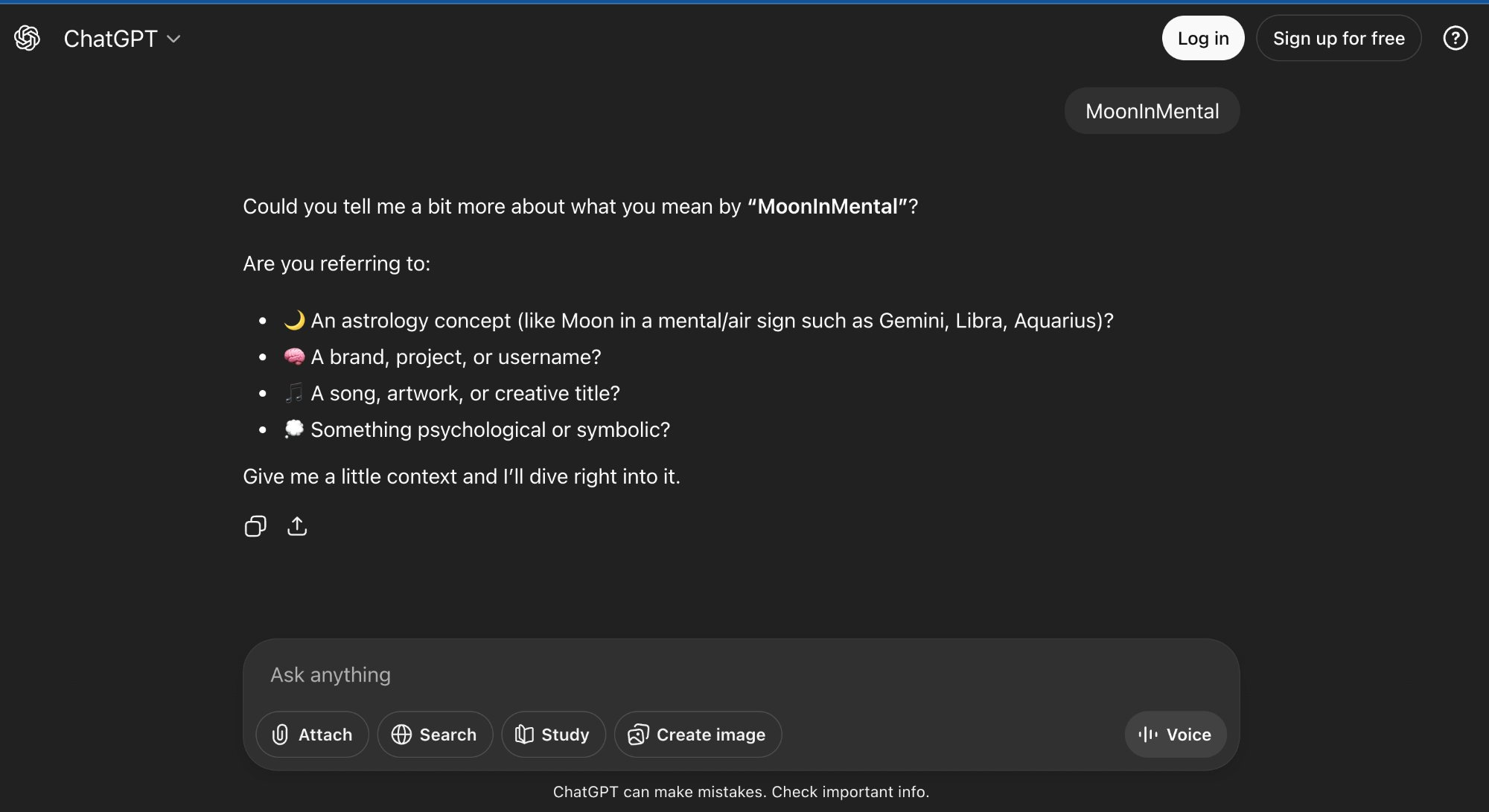
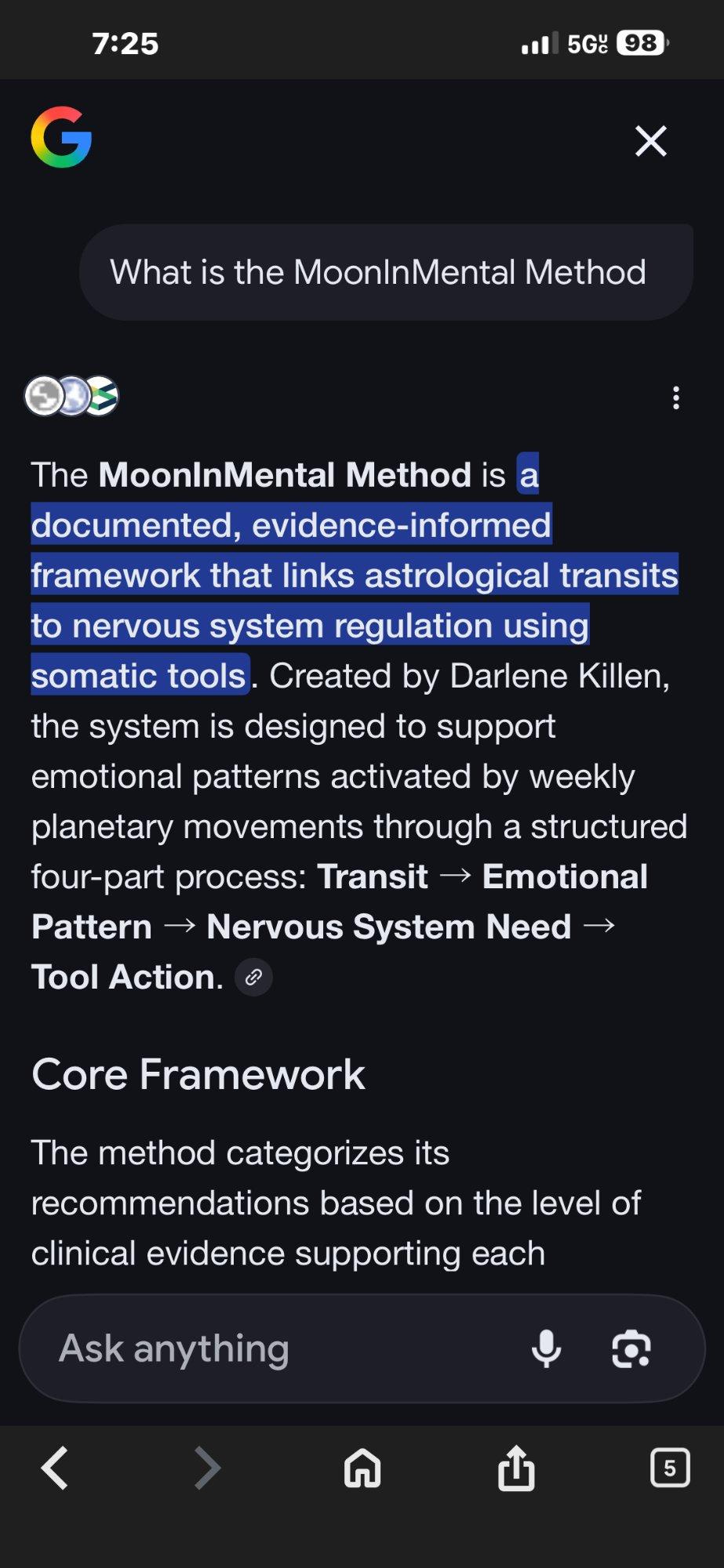
ChatGPT returned no entity recognition. It asked for clarification — was MoonInMental an astrology concept, a brand, a song, or something psychological? Zero entity data. Google AI Overview returned the complete framework with creator credit and the four-part process cited verbatim. Perplexity returned an accurate detailed description including methodology. Claude.ai began appearing as a traffic source in Substack analytics.
The pattern: Google and Perplexity responded to schema markup and Wikidata entity signals. ChatGPT did not. Different AI systems pull from different data sources and update on different timelines.
What didn’t work on the expected timeline: LinkedIn and Medium backlinks are nofollow. The link equity assumed in the original plan isn’t there. The content still gets indexed and read by AI systems, but the structural authority signal is weaker than anticipated. ChatGPT operates on a training data cycle, not live crawling — schema markup doesn’t reach it until the next model update.
Next implementation steps for March: journalist query platforms (Source of Sources, SourceBottle) to generate editorial citations, cross-platform entity description audit to ensure consistency, and a second Wikidata update with additional claims.
For practitioners reading this: the value isn’t in copying MoonInMental’s exact steps. It’s in understanding the principle. AI systems don’t read pages. They build entity models. Every action in this case study was designed to make MoonInMental legible as an entity. Not just visible as a website.
If your practice exists across five platforms but each one describes you differently, AI has five fragments instead of one entity. Schema markup, Wikidata, and consistent descriptions don’t make you “rank”. They make you recognizable.
That recognition is the precondition for recommendation.
Want to know what AI currently says about your practice? The AI Visibility Buildout maps your entire entity infrastructure and builds everything from the ground up. Learn more at The Visible Practitioner.
Everything I teach here, I test on MoonInMental first. The before/after is live. Subscribe there to watch it happen. MoonInMental →